
So you've just bought a CNC machine, an industrial air compressor, or maybe some serious shop equipment: and now you're staring at the specs that say "requires 3-phase power." Meanwhile, your building runs on single-phase. Sound familiar?
You're not alone. Thousands of machine shops, farms, woodworking operations, and small manufacturers face this exact challenge. The good news? You don't need to shell out tens of thousands of dollars to have the utility company run three-phase lines to your property. A phase converter can solve your problem at a fraction of the cost.
But before you buy anything, there are some important things you need to understand. Here are 10 critical points that'll help you make a smart decision.
1. Three-Phase Power Is the Industrial Standard for a Reason
Three-phase electric power is the most widely used form of AC power for industrial applications worldwide. Why? Because it delivers approximately 1.732 times more power than single-phase while using only one additional wire.
Three-phase systems generate three alternating currents that are phase-shifted 120 degrees relative to one another. This offset creates a more constant flow of power compared to single-phase, which is exactly what heavy machinery needs to run smoothly and efficiently.
If you're running equipment like lathes, mills, CNC machines, or large compressors, three-phase is the way to go. The question isn't if you need it: it's how you're going to get it.
2. You Have Three Main Options for Getting 3-Phase Power
When you need to convert single-phase to three-phase power, you've got three primary paths:
Option 1: Utility Installation Have the power company run three-phase lines to your location. This can cost anywhere from $10,000 to $50,000+ depending on distance and infrastructure. Plus, you might wait months for installation.
Option 2: Variable Frequency Drive (VFD) VFDs convert single-phase to three-phase electronically and allow speed control. However, they're typically limited to running one motor at a time and can introduce electrical noise that affects sensitive equipment.
Option 3: Rotary Phase Converter A rotary phase converter uses an idler motor to generate a true third leg of power. It can run multiple machines simultaneously, handles motor starting loads well, and produces clean power suitable for sensitive electronics.
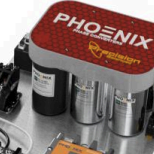
For most shops and industrial applications, a quality 3 phase converter offers the best balance of cost, reliability, and performance.
3. Not All Phase Converters Are Created Equal
Here's where a lot of buyers go wrong. They assume all phase converters do the same thing, so they buy the cheapest option they can find. Big mistake.
Low-quality converters often produce unbalanced voltage: meaning the three phases aren't equal. This imbalance can cause motors to run hot, reduce efficiency, and significantly shorten equipment lifespan. We're talking about potential damage to machines that cost tens of thousands of dollars.
At Phoenix Phase Converters, we've spent over 50 years perfecting our patented balanced power technology. Our units are designed to deliver voltage balance within 1-3%, which is what CNC machines and precision equipment actually need to operate correctly.
4. Voltage Balance Is More Important Than You Think
Speaking of balance: this deserves its own section because it's that critical.
When loads are evenly distributed across all three phases, your equipment runs efficiently and your motors stay cool. Unbalanced loading wastes transformer capacity, causes excess current flow, and creates heat that degrades components over time.
A well-designed single phase to three phase converter actively manages this balance. Cheaper units often claim to produce "three-phase power" but deliver wildly unbalanced output that can damage sensitive equipment.
Before you buy any phase converter, ask about voltage balance specifications. If the manufacturer can't give you a straight answer, that's a red flag.
5. Sizing Matters: And Bigger Isn't Always Better
One of the most common questions we get: "What size phase converter do I need?"
The answer depends on several factors:
- Total horsepower of equipment you'll run simultaneously
- Starting load requirements (some motors draw 5-7x their running amps at startup)
- Whether you're running CNC equipment with varying load demands
A general rule of thumb: size your converter for the largest single motor you'll start, then add capacity for anything else running at the same time. But here's the thing: oversizing dramatically can actually cause problems with voltage regulation on light loads.
This is where working with an experienced manufacturer pays off. We've been helping customers size converters correctly for over five decades.
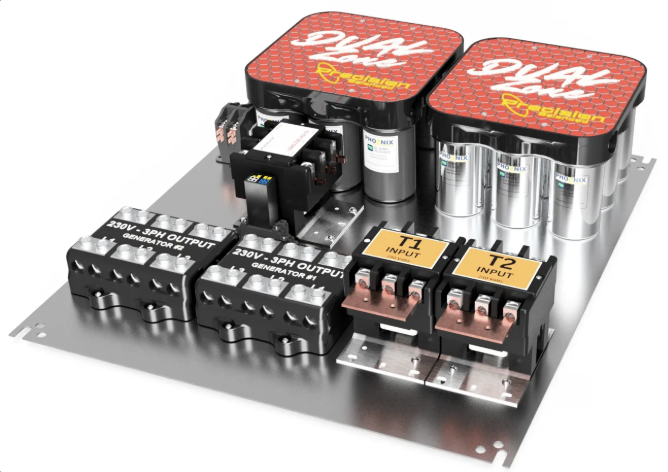
6. Digital vs. Rotary: Know the Difference
You'll see both digital phase converters and rotary phase converters on the market. What's the difference?
Digital Phase Converters use solid-state electronics to create the third phase. They're compact and can provide excellent voltage balance. However, they tend to be more expensive and may not handle high inrush currents as well.
Rotary Phase Converters use an actual spinning motor (idler generator) to create true rotating magnetic fields. They're incredibly robust, handle starting loads well, and have proven reliability over decades of use in demanding environments.
For industrial applications where reliability and longevity matter, a quality rotary phase converter is hard to beat. Our industrial-grade designs are built to run for decades with minimal maintenance.
7. Consider Your Environment
Where will your phase converter live? This matters more than you might think.
If you're installing in a dusty woodshop, a machine shop with metal chips flying around, or an outdoor agricultural setting, you need appropriate protection. Look for NEMA ratings that match your environment.
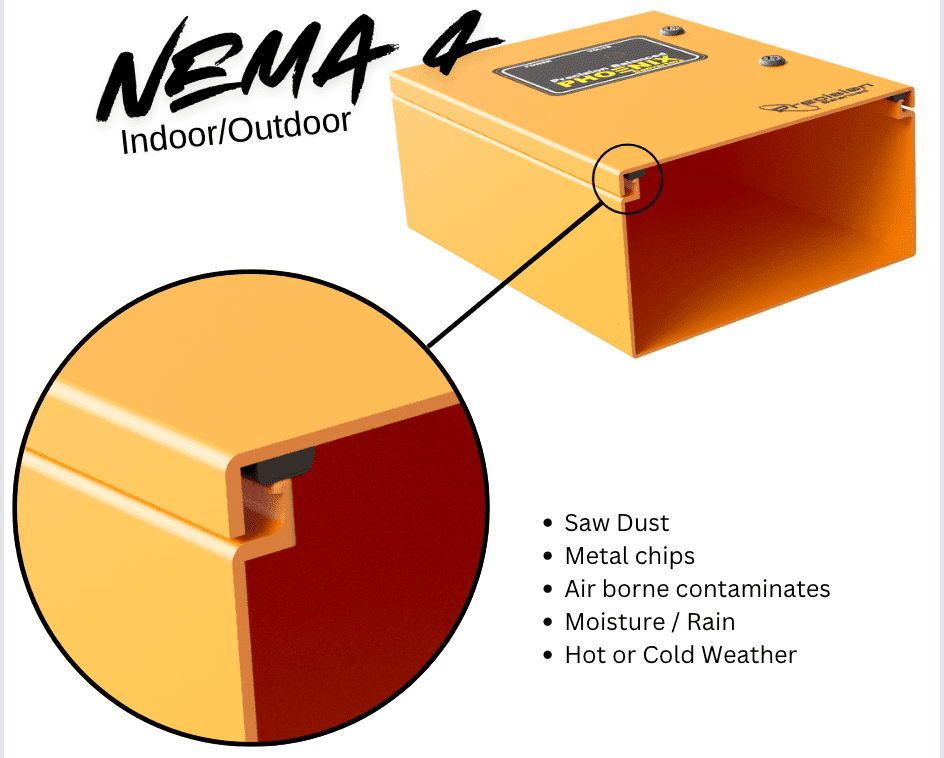
Our NEMA 4 rated enclosures are designed for indoor/outdoor use and provide protection against sawdust, metal chips, airborne contaminants, moisture, rain, and extreme temperatures. It's the kind of detail that matters when you're making a long-term investment.
8. Made in USA Actually Matters Here
When it comes to electrical equipment, where it's manufactured matters for several reasons:
- Quality control: Domestic manufacturing means tighter oversight and consistent quality
- Support: When you need help, you're talking to people who actually built the equipment
- Parts availability: No waiting weeks for components to ship from overseas
- Warranty service: Easier and faster to get warranty claims resolved
All Phoenix Phase Converters are proudly made in the USA. We're not just assembling imported components: we're manufacturing complete systems right here with American materials and American labor.
9. Installation Isn't as Complicated as You Might Think
A lot of people assume installing a phase converter requires an electrical engineering degree. In reality, if you're comfortable with basic electrical work (or have a qualified electrician), installation is straightforward.
Most rotary phase converters connect to your single-phase supply on the input side and provide three-phase output to a distribution panel or directly to your equipment. We provide clear wiring diagrams and technical support to make sure you get it right.
That said, always follow local electrical codes and consider having a licensed electrician handle the installation if you're not confident in your abilities. The money you save doing it wrong isn't worth the risk.
10. Think Long-Term Value, Not Just Upfront Cost
Here's the bottom line: a phase converter is an investment in your operation's capability. The cheapest option might save you a few hundred dollars today, but could cost you thousands in damaged equipment, downtime, and early replacement.
When evaluating options, consider:
- Warranty coverage and manufacturer reputation
- Voltage balance specifications
- Build quality and expected lifespan
- Technical support availability
- Total cost of ownership over 10-20 years
With over 50 years of experience and our patented balanced power technology, Phoenix Phase Converters are built to deliver reliable, precision three-phase power for decades. Our industrial-grade designs aren't the cheapest on the market: but they're engineered to protect your equipment investment and keep your operation running.
Ready to Get Started?
If you're looking for a single phase to three phase converter that actually delivers the balanced, clean power your equipment needs, we'd love to help. Check out our full selection of rotary phase converters or give us a call. We've been solving three-phase power challenges since the beginning, and we're happy to help you find the right solution for your specific application.
When you're ready to add three-phase power, Phoenix Phase Converters has you covered — rotary phase converters from 2HP to 100HP, NLA AutoLink series for compressors, and digital static converters for light loads. Free sizing consultation: 800-417-6568.