
If you’ve just acquired a piece of industrial machinery: maybe a beefy CNC mill, a vintage South Bend lathe, or a heavy-duty air compressor: you’ve likely run into the "Three-Phase Problem." Most residential and small commercial shops are wired for single-phase power, but the high-performance motors in industrial gear crave three-phase electricity to run efficiently.
The solution is a phase converter. But as you start shopping, you’ll quickly find yourself staring at two main options: Static Phase Converters and Rotary Phase Converters.
Choosing the wrong one isn't just a minor inconvenience; it can lead to underpowered tools, overheated motors, or even fried electronics in your expensive CNC equipment. At Phoenix Phase Converters, we’ve spent over 50 years helping shop owners navigate these waters. Let’s break down the differences so you can make the right call for your equipment and your wallet.
What is a Static Phase Converter?
A static phase converter is the "budget-friendly" entry point into the world of three-phase power. Despite the name, it doesn’t actually "convert" single-phase into three-phase power in the traditional sense. Instead, it uses a bank of capacitors to provide a temporary "shove" to get a three-phase motor spinning.
Think of it like a pull-start on a lawnmower. Once the motor is up to speed, the capacitors in the static converter disconnect. From that point on, the motor is essentially running on your original single-phase power, using only two of its three internal windings.
The Pros of Static Converters
- Low Initial Cost: They are significantly cheaper to buy upfront than rotary units.
- Compact Design: They take up very little space and are easy to mount on a wall or the machine itself.
- Simple Installation: If you’re handy with a screwdriver, you can usually get one wired up quickly.
The Cons of Static Converters
- Reduced Power Output: Because the motor is only running on two legs of power after it starts, you lose about one-third to one-half of the motor's rated horsepower. If you have a 10HP motor, it will perform like a 6HP motor.
- Heat Issues: Running a three-phase motor on two legs causes internal imbalance, which generates extra heat. This can shorten the lifespan of your motor if you push it too hard.
- No Multi-Machine Support: A static converter is generally dedicated to one specific machine.
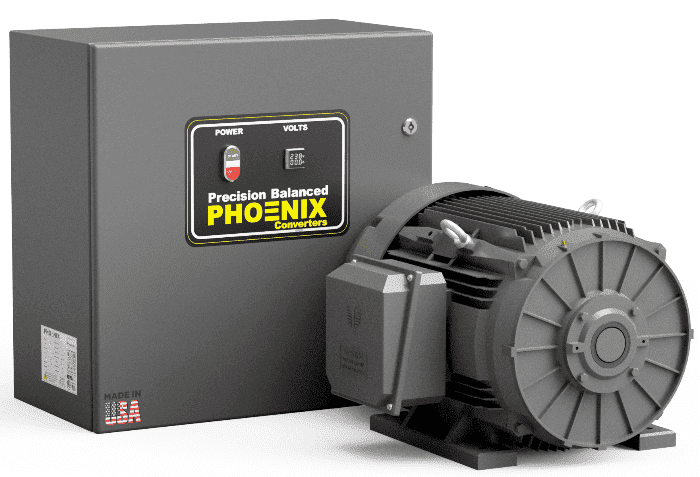
What is a Rotary Phase Converter?
A rotary phase converter is a much more robust solution. It consists of a control panel and a specialized "idler motor." When you feed single-phase power into the panel, it works with the idler motor to generate a true, third line of AC power.
The result is true three-phase power that is often cleaner and better balanced than what the utility company provides in some industrial zones. Because all three legs of power are active and balanced, your machinery can operate at 100% of its rated horsepower indefinitely.
The Pros of Rotary Converters
- Full Power: Your 10HP motor will actually put out 10HP.
- Balanced Voltage: This is critical for CNC machines and anything with sensitive electronics.
- Versatility: One properly sized rotary phase converter can power your entire shop. You can run your mill, your lathe, and your drill press all at the same time (provided the converter is sized for the total load).
- Longevity: A high-quality rotary converter, like the ones we build at Phoenix, is a 20- to 30-year investment.
The Cons of Rotary Converters
- Higher Upfront Cost: There is more hardware involved, so the price tag is higher than a static unit.
- Physical Footprint: You need a spot on the floor or a sturdy shelf for the idler motor.
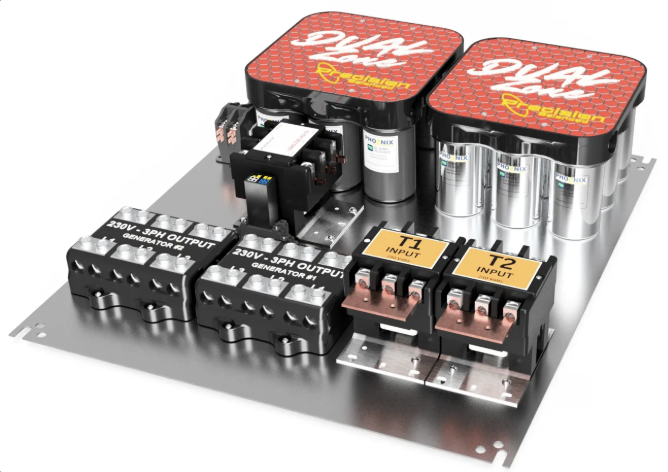
Head-to-Head Comparison
| Feature | Static Phase Converter | Rotary Phase Converter |
|---|---|---|
| Power Delivery | ~66% of rated HP | 100% of rated HP |
| Power Quality | Unbalanced (Runs on 2 legs) | True, balanced 3-phase |
| CNC Compatible | No (Usually damages electronics) | Yes (CNC-grade output) |
| Equipment Support | Single machine only | Multiple machines |
| Best Use Case | Hobbyist, light-duty tools | Professionals, CNC, heavy loads |
Why "True Three-Phase" Matters for Your Shop
If you are running a business: or even a high-end home shop: the quality of your power matters. Most modern machinery, especially anything with a computer (CNC), relies on balanced voltage across all three legs.
When you use a static converter, the "third leg" essentially disappears once the motor starts. If your machine expects to see 230V on all three legs and only sees it on two, the control boards can become unstable, throw error codes, or even burn out.
Our rotary phase converters are engineered to produce "CNC-grade" power. This means the voltage balance is tight enough to satisfy even the most finicky Haas or Fanuc controllers.

Specific Equipment Recommendations
Still not sure which way to go? Here is a quick guide based on the tools you might be running:
When a Static Converter is "Fine"
If you are a hobbyist using a machine for 20 minutes once a week, and that machine is a simple, "dumb" motor (no electronics), a static converter might work for:
- Small drill presses
- Light-duty table saws
- Bench grinders
- Manual mills used for very light cuts
When a Rotary Converter is "Required"
For almost any professional application or heavy-duty machinery, you need a rotary phase converter. This includes:
- CNC Machines: Mills, lathes, and routers. Do not risk your control boards on a static converter.
- Air Compressors: These start under load and require high torque. A static converter will often fail to start them or cause the motor to burn out quickly.
- Welders: Three-phase welders require extremely stable power for a clean arc.
- Submersible Pumps: These need full power to move fluid efficiently.
- Lathes and Mills: Especially if you are taking heavy chips or running at high RPMs.
The Phoenix Difference: 50 Years of American Engineering
When you’re looking at your options, you’ll see a lot of "cheap" converters online. But at Phoenix Phase Converters, we look at things differently. We’ve been in the electrical contracting and manufacturing game for over five decades. We’re a family-owned business, and every single one of our converters is Made in the USA.
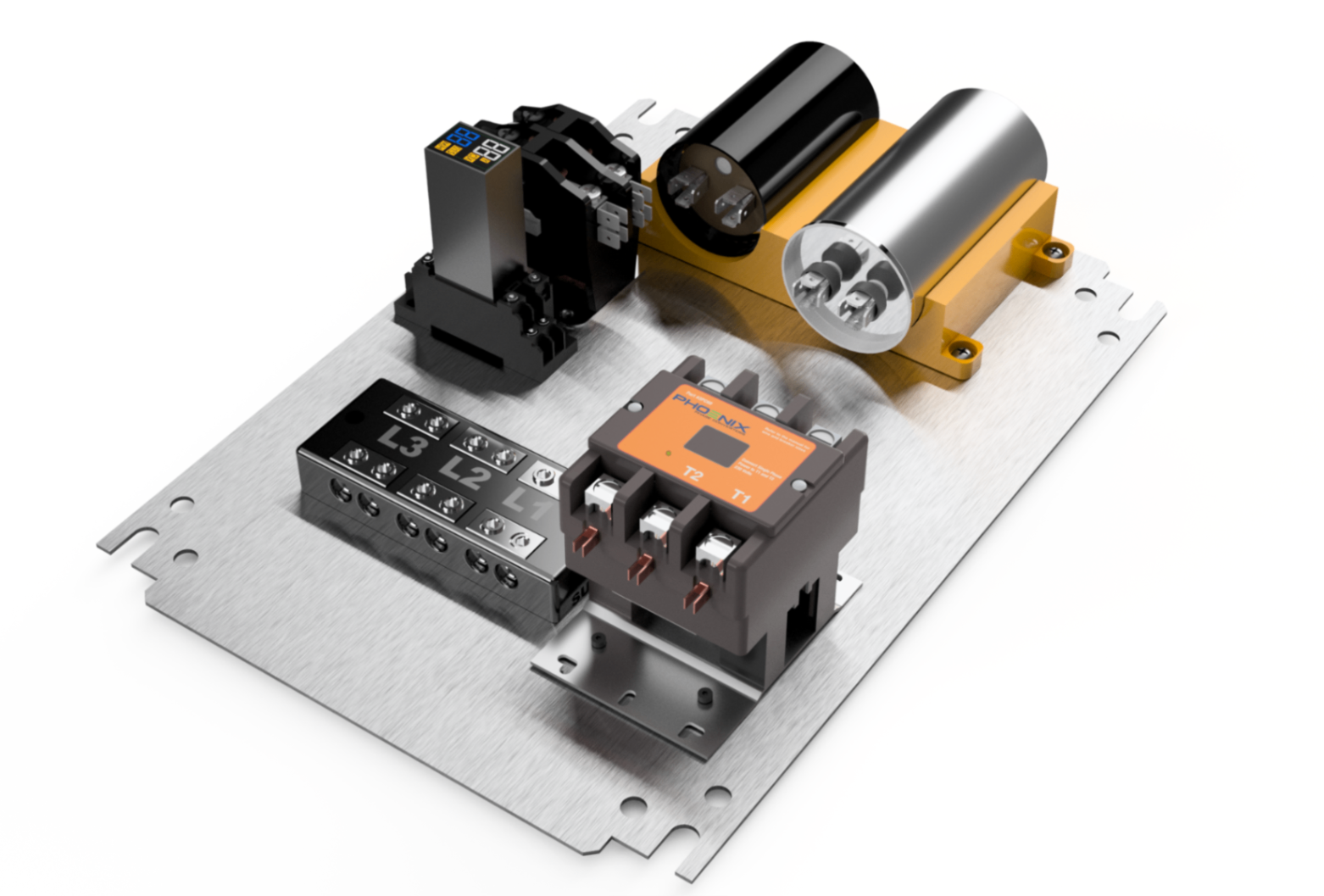
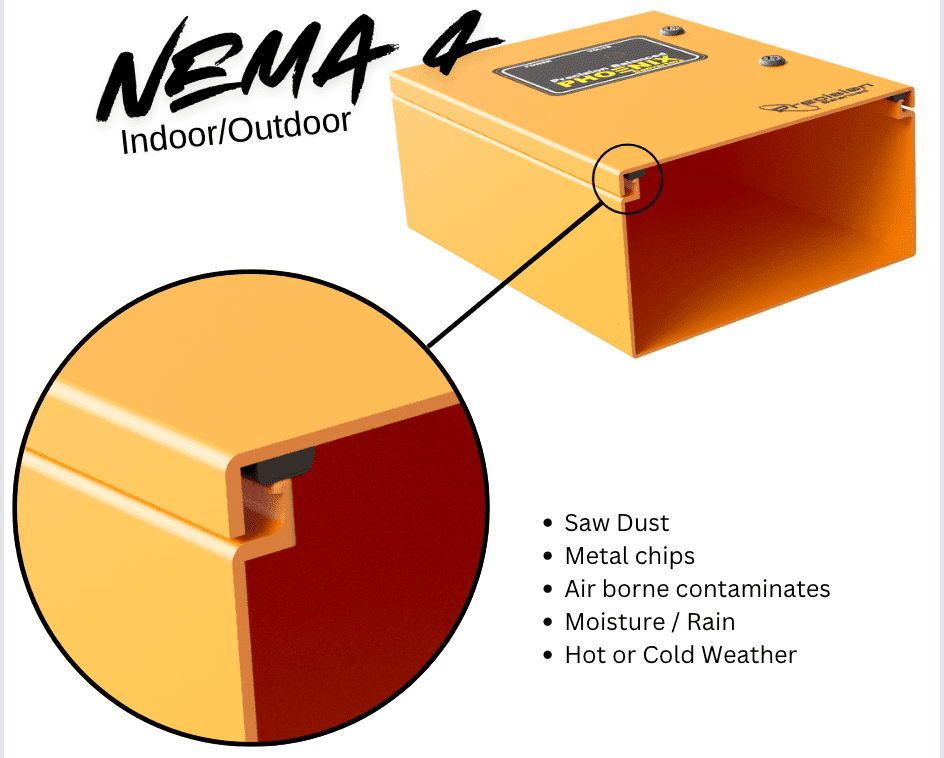
We don't cut corners on components. For example, our phase converter panels use heavy-duty relays and CNC-grade capacitors. We also offer NEMA 4 enclosures for shops that deal with a lot of dust, metal chips, or moisture.
Sizing It Right
One of the biggest mistakes shop owners make is undersizing their converter. A "5HP" converter might start a 5HP motor, but if that motor is starting under a heavy load (like an air compressor), you actually need to double your sizing.
We take the guesswork out of the process. If you aren't sure what size you need, you can check out our help and support section or give us a call. We’d rather spend 10 minutes on the phone with you now to make sure you get the right unit than have you deal with a tripped breaker later.
Durability in the Shop Environment
Shops are dirty. They’re hot in the summer and cold in the winter. They’re full of sawdust and oil mist. A phase converter is the heartbeat of your shop; if it dies, your production stops.
That’s why our units are built with robust aluminum backplates for heat dissipation and high-quality wiring that won't get brittle over time. Whether you need a simple rotary phase converter or specialized transformers to step your voltage up or down, we build them to survive the "real world."
Final Thoughts: Investment vs. Expense
A static phase converter is an expense: it’s a quick fix to get a motor spinning, but it limits what your machines can do and can lead to higher maintenance costs down the road.
A rotary phase converter is an investment. It unlocks the full potential of your machinery, protects your electronics, and gives you the flexibility to grow your shop. When you choose a Phoenix unit, you're getting 50 years of expertise and a product built by people who actually understand the electrical demands of a working shop.
Ready to upgrade your power? Shop our store today or browse our full collection of converters to find the perfect fit for your equipment. Don't settle for two-thirds of the power when you can have the real deal.