
For any machine shop owner, the arrival of a CNC (Computer Numerical Control) machine is a milestone. Whether it’s a vertical machining center, a CNC lathe, or a precision router, these machines represent a significant investment in productivity and accuracy. However, that excitement often hits a literal wall when you look at the power requirements. Most industrial CNC machines require three-phase power, but the vast majority of small shops, residential garages, and rural workspaces only have access to standard single-phase utility power.
To bridge this gap, you generally have two main options: a Variable Frequency Drive (VFD) or a rotary phase converter. While both serve the primary purpose of acting as a single phase to three phase converter, they operate in fundamentally different ways. Choosing the wrong one doesn’t just mean your machine won't run; it could mean catastrophic failure for the sensitive electronics inside your CNC cabinet.
In this guide, we will break down the pros and cons of each technology and explain why the "balanced power" of a Phoenix Phase Converter is often the deciding factor for CNC applications.
Understanding the CNC Power Challenge
Before diving into the hardware, it is important to understand why a CNC machine is different from a standard three-phase motor, like those found on an old bridgeport mill or a drill press.
A standard motor is a "dumb" load: it consumes power to create rotation. A CNC machine is a "smart" load. It contains a spindle motor, several axis motors (servos), and most importantly, a sophisticated computer controller. These controllers are packed with sensitive microprocessors, encoders, and low-voltage relays that require extremely stable, "clean" power. If the voltage between the three legs of power is not perfectly balanced, the CNC controller may detect a fault and shut down, or worse, the unbalanced voltage could overheat and fry the expensive circuit boards.
Option 1: The Variable Frequency Drive (VFD)
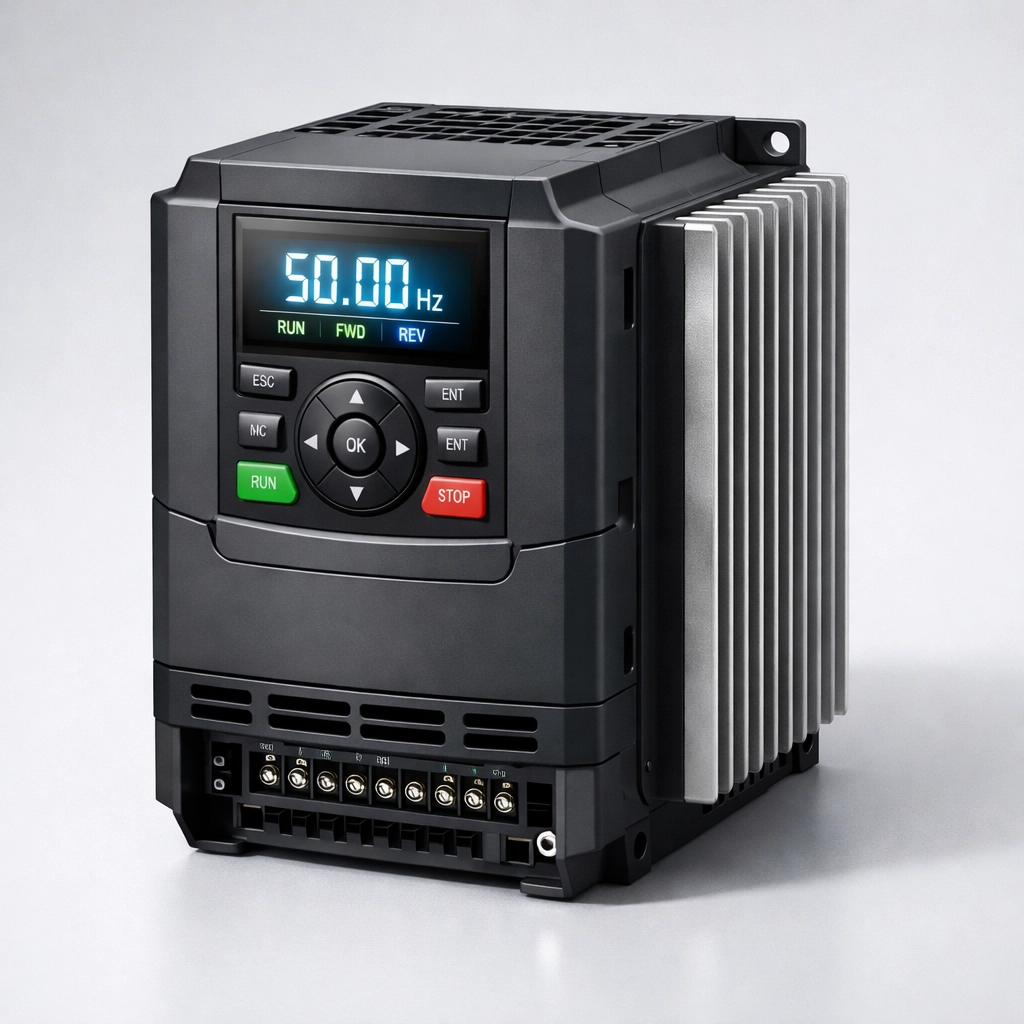
A VFD is a solid-state electronic device that takes single-phase AC power, converts it to DC, and then "inverts" it back into three-phase AC power. Its primary claim to fame is its ability to vary the frequency (Hertz) sent to the motor, which allows for precise speed control and direction changes without the need for mechanical gears.
The Pros of VFDs for CNC
- Speed Control: You can program your CNC software to tell the VFD exactly what RPM the spindle should run at. This is essential for modern machining where tool paths require varying speeds.
- Soft-Starting: A VFD ramps the motor up to speed gradually. This eliminates the high "inrush current" that can dim the lights in your shop and reduces mechanical wear and tear on your spindle bearings.
- Compact Size: VFDs are relatively small and can often be mounted directly inside the CNC’s electrical cabinet.
The Cons of VFDs for CNC
- Limited to One Motor: A VFD is designed to run one motor. It cannot power the entire CNC machine (the controller, the coolant pump, the fans, and the spindle) simultaneously. You would technically need a VFD for every individual motor on the machine.
- Electrical Noise: VFDs generate high-frequency electrical "noise" (EMI/RFI). Without proper filtering, this noise can interfere with the CNC’s digital signals, leading to ghost errors or erratic behavior.
- HP Limitations: While high-horsepower VFDs exist, they become incredibly expensive and complex to wire for single-phase input once you get above 3 HP or 5 HP.
Option 2: The Rotary Phase Converter
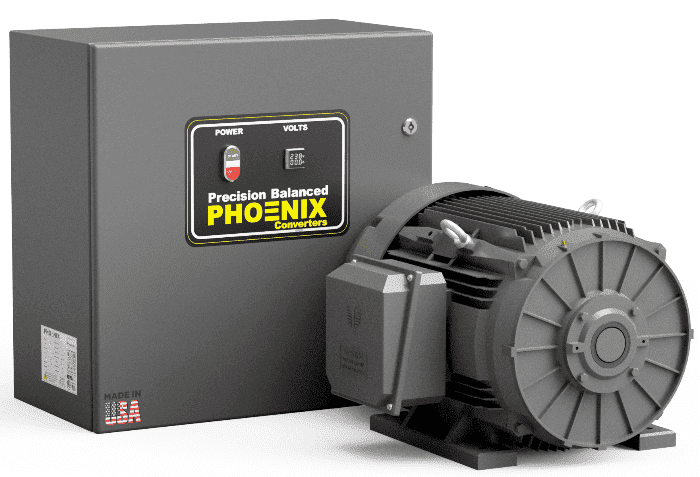
A rotary phase converter uses a combination of a control panel and a rotary transformer (an idler motor) to produce true three-phase power from a single-phase source. It essentially acts as a localized power plant for your shop.
The Pros of Rotary Phase Converters
- Powers the Whole Machine: Unlike a VFD, a phase converter provides power to the entire CNC machine. This means your spindle, your servos, and your sensitive computer controller all run off the same unit.
- Longevity and Reliability: A high-quality rotary unit, like those built by Phoenix Phase Converters, can last decades. There are no complex circuit boards to burn out, just heavy-duty American-made components.
- High Capacity: If you have a 10 HP or 20 HP CNC, a rotary converter is the most cost-effective way to get it spinning. You can even use one large converter to power multiple machines in your shop at the same time.
The Cons of Rotary Phase Converters
- No Native Speed Control: A rotary converter provides a fixed 60Hz output. If you need to vary the spindle speed, the CNC machine must have its own internal drive or gear system.
- Physical Footprint: These units include a physical motor (the idler), which takes up floor space and produces a low hum while running.
The Phoenix Advantage: CNC-Grade Balanced Power
The biggest risk when using a single phase to three phase converter on a CNC machine is voltage imbalance. In a standard rotary converter, the "manufactured leg" (the third leg created by the converter) can often have a much higher voltage than the two utility legs when the machine is idling. This "wild leg" can be lethal to CNC electronics.
This is where Phoenix Phase Converters changes the game. Our units are engineered with CNC-Grade Balanced Power technology.
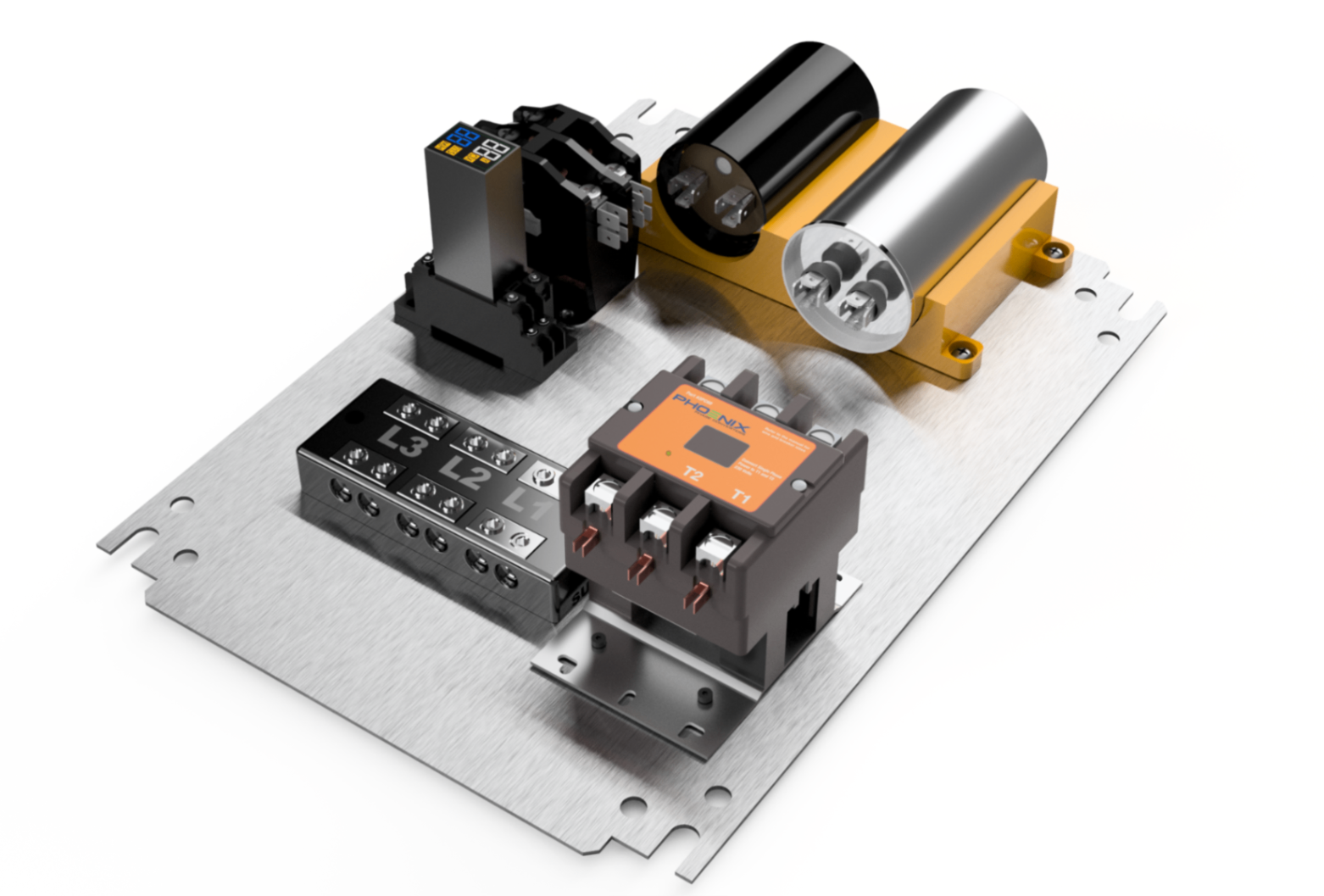
We use precision-sized, high-grade capacitors and heavy-duty relays to ensure that the voltage across all three legs: L1, L2, and L3: stays within a very tight tolerance (typically within 2-5%). This level of precision ensures that your CNC controller sees the "clean" power it expects, preventing nuisance trips and protecting your machine's electronic lifespan.
Which One Should You Choose?
The decision usually comes down to the complexity of your machine and your future shop plans.
Choose a VFD if:
- You are running a simple, standalone 3-phase motor (like a manual lathe or a basic 3-phase drill press converted to CNC).
- You require variable spindle speed control through software and the motor is under 3 HP.
- You are comfortable with electrical programming and wiring.
Choose a Rotary Phase Converter if:
- You are running a modern CNC machine (Haas, Mazak, Tormach, etc.) with an integrated computer controller.
- The machine has its own internal electronics, cooling systems, and multiple motors.
- You want a "set it and forget it" solution that can grow with your shop.
- You need to power a machine larger than 5 HP, such as a 5 HP Rotary Phase Converter.
Sizing Your Converter for CNC Applications
Sizing is critical. For CNC machines, we always recommend "double-sizing" or at least 1.5x sizing the converter. If your CNC spindle is 5 HP, you should look at a 7.5 HP or 10 HP rotary phase converter. This extra "headroom" ensures that when the spindle kicks on under a heavy load, the voltage doesn't sag, which could cause the CNC controller to reset mid-cut: potentially ruining your workpiece and your tooling.
For those dealing with voltage steps, such as running a 480V machine on a 240V shop circuit, you may also need a transformer. We offer a wide range of 3-phase transformers to ensure your equipment gets the exact voltage it was designed for.
Built for the Toughest Shop Environments
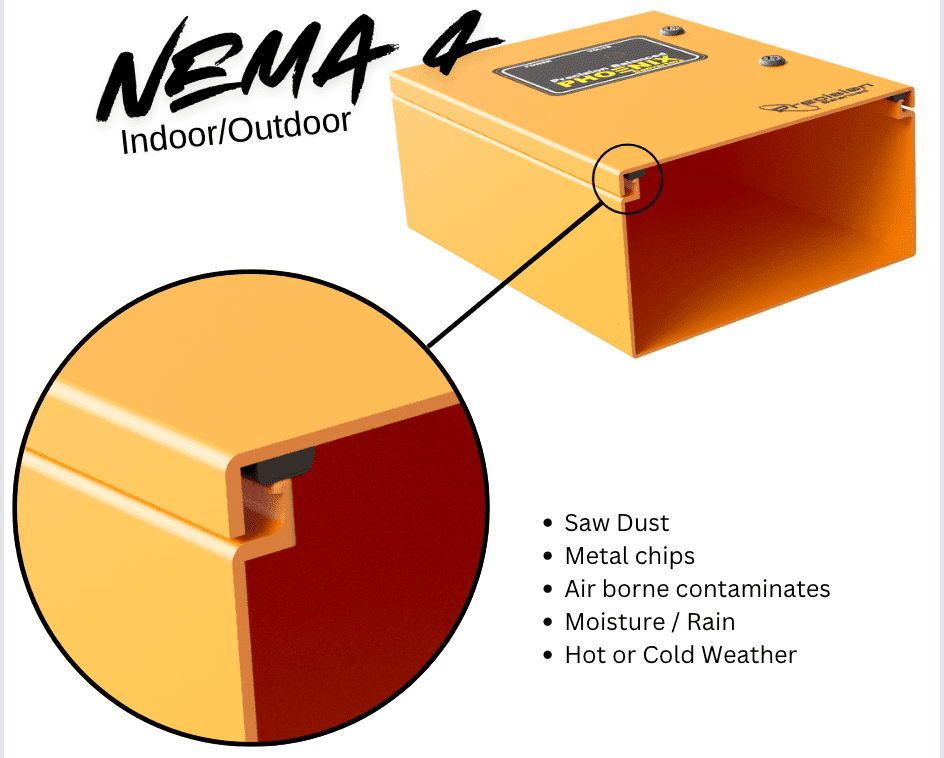
We know that machine shops aren't clean rooms. They are full of metal chips, coolant mist, and sawdust. That is why our components are housed in robust enclosures designed to withstand the rigors of industrial use.
Whether you are looking for a compact 3 HP unit for a small hobby mill or a massive dual-zone system for a production facility, the build quality remains the same: Made in the USA with a focus on reliability.
Final Thoughts
While VFDs have their place in the shop for specific motor control tasks, the rotary phase converter remains the gold standard for powering complete CNC machines. The ability to provide balanced, stable three-phase power to every component of the machine: from the computer brain to the spindle brawn: makes it the safest and most reliable choice for your investment.
Still not sure which model fits your specific CNC machine? At Phoenix Phase Converters, we specialize in helping machinists find the perfect power solution. Contact our team today, and let’s get your shop running at full capacity.
Ready to choose? If a rotary phase converter is right for your application, explore our full line — from the GP2NL 2HP for small shops to the GP40NL 40HP for CNC machining centers. For compressor and HVAC loads, see the NLA AutoLink series. Free sizing help at 800-417-6568.